

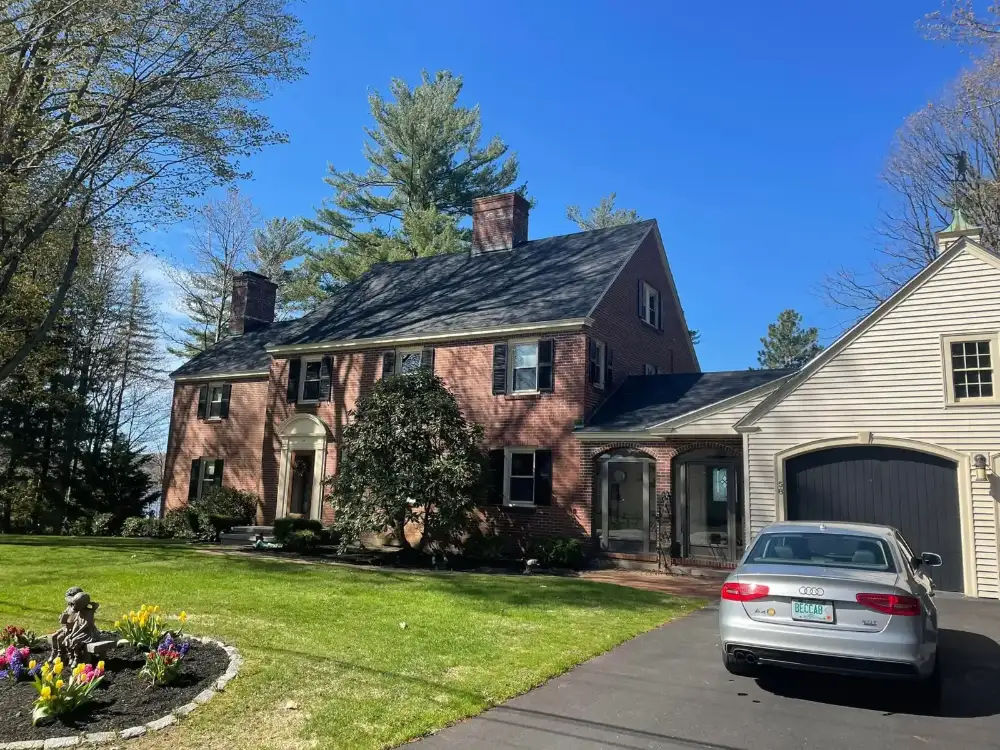
A roof in Tilton, NH has to handle snow, ice, freezing temperatures, spring rain, summer sun, and changing conditions throughout the year. Those cycles can turn a small roofing problem into a leak or more widespread deterioration if damage goes unnoticed.
The quickest way to tell whether your roof needs repair or replacement is to look at the extent of the damage. A few damaged shingles, an isolated leak, or a problem around flashing may be repairable. Widespread shingle deterioration, repeated leaks, sagging areas, or damage affecting multiple parts of the roof can make replacement the more practical option. A professional roof inspection can help determine which approach fits the roof’s actual condition.
What local homeowners should know
-
A small, isolated roofing problem may be a good candidate for repair when the surrounding roofing materials remain in serviceable condition.
-
Snow, ice, and freeze-thaw cycles around Tilton can expose weak shingles, flashing, and roof penetrations.
-
Water stains inside the house can indicate a roofing problem, but the visible stain may not be directly below the point where water entered.
-
Homes throughout the Lakes Region can experience roofing wear differently depending on roof design, tree cover, sun exposure, ventilation, and maintenance history.
-
Repeated repairs in different areas may be a sign that it is time to evaluate the roof as a whole rather than continue addressing individual symptoms.
Why Roof Condition Matters in Tilton
Roof condition matters in Tilton because New Hampshire weather repeatedly exposes roofing materials to moisture, snow loads, ice, wind, and temperature changes. A weakness that seems minor during dry weather can become more noticeable when melting snow or heavy rain sends water across the same vulnerable area.
Local homes near the Winnipesaukee River and throughout the surrounding Lakes Region experience distinct seasonal changes. Snow accumulation in winter can be followed by melting and refreezing, while spring brings additional moisture. Summer heat and sun also contribute to the normal aging of roofing materials.
Shingle Pro LLC helps property owners evaluate roofing concerns and determine whether repair or replacement makes sense for the situation. When we inspect a roof, the goal is to look beyond one visible symptom and understand the condition of the roofing system more broadly.
Local Roofing Conditions and Field Observations
Local roofing conditions make moisture management and seasonal wear especially important for homes in central New Hampshire. Rather than assuming every leak requires a new roof, the better approach is to consider where the problem is located, how extensive it is, and whether surrounding materials remain functional.
Roof problems commonly become noticeable after periods of snow, ice, wind, or rain. Vulnerable locations can include valleys, flashing, roof edges, vents, chimneys, and other penetrations.
Homes in Tilton also vary considerably in roof shape, age, tree exposure, and previous maintenance. Those differences are why the same visible symptom can point to a relatively small repair on one property and a larger roofing issue on another.
How Roof Damage Can Affect Your Home
Roof damage can affect your home by allowing moisture to reach materials that the roofing system is supposed to protect. Depending on where water travels, homeowners may notice staining, damp insulation, damaged ceilings, deterioration around roof decking, or other moisture-related problems.
This matters during New Hampshire winters because roofing vulnerabilities can be difficult to address once severe weather arrives. Catching a developing issue during milder conditions may provide more time to evaluate repair and replacement options before another round of snow or freezing weather.
Warning Signs Your Roof May Need Attention
The clearest warning signs include missing or damaged shingles, recurring leaks, visible sagging, deteriorated flashing, and widespread roofing wear. Tilton homeowners should pay particular attention after storms and during seasonal transitions when existing weaknesses may become easier to spot.
Watch for these signs:
-
Missing, cracked, lifted, or visibly damaged shingles.
-
Water stains appearing on ceilings or walls.
-
Leaks that return after previous roofing work.
-
Visible deterioration around flashing, chimneys, vents, or roof valleys.
-
Shingle granules collecting in gutters or near downspouts.
-
Areas of the roofline that appear uneven or sagging.
-
Multiple sections of the roof showing noticeable wear.
-
Daylight, moisture, or staining visible from accessible attic areas.
One warning sign does not automatically mean the entire roof needs replacement. The extent and cause of the problem matter.
When Should You Call a Roofing Professional?
You should call a roofing professional when you see active leaking, missing roofing materials, widespread deterioration, sagging, storm damage, or a problem that keeps returning. A professional evaluation is also useful when you cannot safely determine the source or extent of the damage from the ground.
Homeowners can safely perform basic visual checks from ground level and inspect accessible indoor spaces for stains or moisture. Avoid climbing onto a wet, icy, steep, or damaged roof.
For properties in Tilton, an inspection after noticeable storm damage or when persistent leaks develop can help separate an isolated repair from a more extensive roofing problem.
Common Causes of Roof Problems in the Tilton Area
Common local causes of roofing problems include snow and ice, freeze-thaw cycles, wind, water intrusion, aging materials, and problems around flashing or penetrations. These factors can occur individually or combine over several seasons.
-
Snow and ice: Winter accumulation can place additional stress on vulnerable roofing areas and make existing defects more noticeable.
-
Freeze-thaw cycles: Meltwater can refreeze as temperatures change, repeatedly exposing roof edges and drainage areas to winter conditions.
-
Wind: Strong weather can loosen or remove roofing materials, particularly when shingles are already damaged or deteriorated.
-
Flashing problems: Areas around chimneys, walls, vents, and other roof transitions depend on properly functioning flashing to direct water away.
-
Normal aging: Roofing materials gradually deteriorate from years of weather exposure.
-
Drainage problems: Debris-filled gutters or other drainage issues can interfere with the normal movement of rainwater and snowmelt away from the roof.
How Can You Help Prevent Roofing Problems?
You can help prevent roofing problems by checking your roof regularly, keeping drainage paths clear, watching for interior moisture, and addressing visible damage before another harsh season arrives. In central New Hampshire, spring and fall are especially useful times for basic visual checks.
From the ground, look for missing shingles, damaged roof edges, debris buildup, and changes in the roof’s appearance. Keep gutters and downspouts functioning so water can move away from the structure.
Inside, check accessible attic areas and upper-floor ceilings for unexplained staining or moisture.
DIY maintenance should stop when a task requires walking on the roof, working near a steep edge, diagnosing structural concerns, or opening roofing materials. Those situations are better evaluated professionally.
What Results Can You Expect From Roof Repair or Replacement?
A successful roof repair should address a defined problem, while replacement addresses broader deterioration when isolated repairs are no longer the appropriate solution. The right result depends on the cause of the problem and the condition of the existing roofing system.
A repair may involve correcting damage in a limited area, such as affected shingles or flashing. Replacement involves addressing the roofing surface more comprehensively when condition, damage, or repeated problems justify that approach.
For Tilton homeowners, the objective should be to choose the scope of work that matches the roof’s actual condition rather than automatically choosing the smallest or largest project.
Common Roofing Mistakes to Avoid
The most common roofing mistakes involve waiting too long, treating symptoms without finding the cause, and attempting unsafe DIY work. New Hampshire’s changing seasons can make these mistakes more costly when an unresolved problem remains exposed to additional rain, snow, or ice.
Mistake: Ignoring a small ceiling stain.
Consequence: Additional moisture may enter before the next visible sign appears.
Better approach: Investigate the source instead of assuming the stain is harmless.
Mistake: Replacing one damaged shingle without assessing surrounding areas.
Consequence: Other deterioration may remain unnoticed.
Better approach: Evaluate the nearby roofing materials and likely source of the damage.
Mistake: Climbing onto an icy or wet roof.
Consequence: Falls and injuries can occur.
Better approach: Inspect from a safe location and leave hazardous roof access to professionals.
Mistake: Automatically assuming an older-looking roof needs replacement.
Consequence: You may make a decision without understanding its actual condition.
Better approach: Base the repair-versus-replacement decision on an inspection and the extent of deterioration.
A Common Local Roofing Scenario
A common local scenario is a homeowner noticing an interior stain after snow begins melting or after a period of heavy rain. The natural assumption may be that the entire roof has failed, but the source could be limited to a particular vulnerable area.
The opposite can also happen. What appears to be one small leak may be accompanied by deterioration in several roof sections.
That is why we look at the overall condition before determining whether a targeted repair or a larger roofing solution should be considered.
Which Roofing Services Can Address the Problem?
Roof inspection, repair, and replacement are the primary solutions for determining and correcting roofing problems. The appropriate service depends on whether damage is isolated, how much of the roof is affected, and whether the existing materials remain suitable for continued service.
A professional assessment can help identify damaged areas and provide information for comparing your options.
Roof Repair vs. Roof Replacement
Roof repair is generally better suited to isolated problems, while replacement becomes more relevant when deterioration is widespread or problems repeatedly affect the roofing system. Neither option should be selected solely because it appears less expensive in the short term.
| Consideration | Roof Repair | Roof Replacement |
|---|---|---|
| Damage area | More appropriate for isolated damage | More appropriate for widespread problems |
| Recurring leaks | May work if the cause is limited | Worth considering when leaks occur in multiple areas |
| Overall condition | Better when surrounding materials remain serviceable | More relevant when deterioration affects much of the roof |
| Project scope | Focused on a defined problem | Addresses the roof more comprehensively |
| Decision basis | Cause and extent of damage | Overall condition and long-term practicality |
For a Tilton property, seasonal exposure should also factor into timing. A roof showing substantial problems before winter deserves attention before snow and ice make inspection and exterior work more difficult.
Roofing Service Areas Around Tilton
Roofing needs in Tilton are shared by homeowners throughout nearby central New Hampshire communities exposed to the same changing seasons. Property owners in areas such as Northfield, Franklin, Sanbornton, and the broader Lakes Region may encounter similar concerns involving snow, ice, rain, wind, and seasonal roof wear.
What Can Happen If You Ignore Roof Damage?
Ignoring roof damage can allow a limited problem to spread and increase the amount of material affected by moisture. Waiting may also make it harder to plan roofing work around the severe winter conditions common in New Hampshire.
A missing shingle or small leak is not proof that major damage will occur, but it is useful evidence that the roof deserves attention. Early evaluation gives you more information and can help you make a planned decision instead of reacting to a worsening leak.
Frequently Asked Questions
How do I know if my roof in Tilton needs repair or replacement?
Look at whether the damage is isolated or widespread. A limited area of damaged shingles or flashing may be repairable, while recurring leaks, extensive deterioration, sagging, or problems across multiple roof sections can make replacement worth considering. An inspection provides a clearer picture of the roof’s overall condition.
Can New Hampshire winters damage a roof?
Yes, winter conditions can expose and worsen existing roofing vulnerabilities. Snow, ice, moisture, and repeated freezing and thawing can affect roof edges, flashing, drainage areas, and already damaged materials. Homeowners should watch for changes during winter and inspect accessible areas once conditions allow.
Does one roof leak mean I need a new roof?
No, one roof leak does not automatically mean you need a replacement. A leak may come from a localized problem involving shingles, flashing, a penetration, or another specific area. The decision depends on the cause of the leak and the condition of the rest of the roof.
When should Tilton homeowners inspect their roofs?
Spring and fall are useful times for routine visual roof checks in Tilton, with additional checks after significant storms. Spring can reveal problems that became noticeable during winter, while fall gives homeowners an opportunity to identify concerns before snow and ice return. Ground-level and indoor inspections are the safest DIY options.
Should I repair an older roof or replace it?
The roof’s condition matters more than age alone when choosing between repair and replacement. An older roof with an isolated problem may still warrant repair, while widespread deterioration or repeated problems can change the calculation. A professional assessment can help determine how much of the roofing system is actually affected.
What roofing warning signs should Lakes Region homeowners watch for?
Watch for missing shingles, leaks, ceiling stains, damaged flashing, sagging areas, granule loss, and deterioration across multiple sections. Lakes Region properties also face snow, ice, rain, and temperature changes, so changes that appear after severe weather or seasonal transitions deserve attention.
Can I inspect my roof myself after a Tilton snowstorm?
You can visually inspect your property from the ground and check accessible interior areas, but avoid climbing onto a snowy or icy roof. Look for visible missing materials, unusual roofline changes, interior staining, or signs of moisture. Conditions that require roof access should be evaluated safely by a professional.
Is it better to address roof damage before winter in New Hampshire?
Yes, known roofing problems are generally better evaluated before harsh winter conditions arrive. Snow and ice can make roof access more difficult and expose existing vulnerabilities to additional moisture. Addressing concerns during suitable weather gives homeowners more opportunity to understand their options and plan necessary work.
Protect Your Tilton Home With the Right Roofing Solution
Whether your roof needs a focused repair or a more comprehensive replacement depends on what is happening above the surface. We can help you evaluate the condition of your roof and understand the available options without assuming every roofing concern requires the same solution.
Get Answers About Your Roof Before the Next Storm
Know whether repair or replacement is the appropriate next step for your Tilton property.